
Researchers investigate energy sources for electric forestry machinery
Automation
The electrification of forestry is often described as a key step in the green transition. However, energy-intensive forestry machinery operating far from roads and the energy grid, makes the transition complex. Researchers are now investigating how the electric machinery of the future can be supplied with energy.

Forestry is one of the most challenging sectors to electrify. The machinery operates in difficult, rugged terrain, it is exposed to severe cold and machines are in operation for long periods without interruption. In addition, a forestry machine operating near built-up areas operates under completely different conditions to one working in remote locations. All this variation makes electrification in forestry difficult but still highly relevant, both from a climate perspective and also because it can lead to reduced costs. One research project is currently investigating various solutions for securing the energy supply. This initiative is funded by Mistra Digital Forest and the ZEFO research and innovation project.
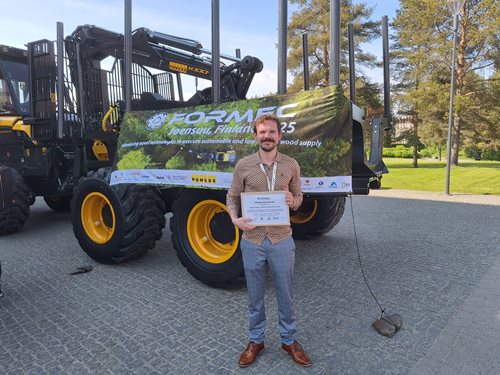
– There are several potential energy carrier options; we are primarily looking at batteries, hydrogen and ammonia. All are of interest for the electrification of forestry machinery, and they all present different advantages and challenges. The project is investigating how energy requirements vary between different regions, and different applications. This gives us an understanding of the suitability of the various alternatives, says Justin Herdegen, a PhD student at SLU.
” The electrification of forestry is likely to involve not one solution, but several”
Ammonia and hydrogen offer high energy density and rapid refuelling. At the same time, they lack a sufficiently developed production and distribution infrastructure; both energy sources also raise questions regarding safety and costs. Batteries are currently the most well-established option, offering high energy efficiency and relatively mature technology. However, their weight and the requirement for charging infrastructure makes them less suitable for long-distance transportation. One conceivable future scenario is that batteries are used in smaller areas and near charging stations, whilst hydrogen and ammonia are better suited to large-scale projects in remote locations.
– The aim is to increase understanding of how different energy carriers can play a role in the electrified forestry of the future. When and where do they work best? What conditions are currently lacking, and what is needed for them to become realistic alternatives? The answers vary depending on the machine, the geographical location, and the work to be carried out. The electrification of forestry is likely to involve not one solution, but several, says Justin Herdegen.